The Glass Noticeboard: Seven Days at the Corner-Shop Window That Trelispen Keeps Talking To
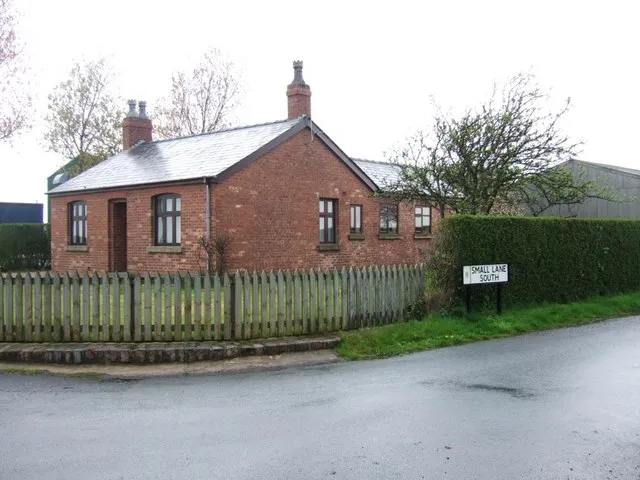
Photo: Bryan Pready, CC BY-SA 2.0, via Wikimedia Commons
The window of Penrose's Stores on Bell Lane has no price tags in it this week. It has a torn umbrella, a glued teapot, a re-soled boot and a handwritten card that reads: "Borrowed from Doreen. Please don't breathe on it." This is not unusual. On any given Thursday, the window is the most reliably read piece of culture in Trelispen. It is also the least official.
Gwen Penrose has run the shop for nineteen years. She is not a curator, though she has the manner of one. She is not an artist, though she has strong views on composition. She is a shopkeeper who realised, some time ago, that the window was never really hers.
"People ask me what the display is about," she says, straightening a label that does not need straightening. "I say, ask the town. I just put it up."
Monday: The Empty Glass
At 8.10am on Monday the window is bare except for a dead moth and a strip of blue tape left from last week. The blue tape held up a notice about the Christmas switch-on. It has lost its stick. Gwen is in no hurry to replace it.
The blankness is deliberate. "If I leave last week's up, people stop looking," she says. "An empty window asks a question. People come in and answer it."
The first answer arrives before 9am, in the form of a man called Ron who says the window looks like a dentist's waiting room with the magazines taken out. He is not being unkind. He is being helpful. By 10am, two more people have offered suggestions. One is about the ring road. One is about a missing cat. Neither is relevant to anything, and yet both feel like part of the same ongoing production.
Tuesday: A Theme Arrives Sideways
By Tuesday lunchtime, the theme has arrived: small repairs. It did not arrive through a meeting. It arrived through the counter, where someone mentioned a kettle that had been rewired and someone else said their mother had a boot mended in 1998 and still wore it to church.
By 3pm, a rewired lamp from Ron is in the window. By 4pm, a blue jumper with a darned elbow has joined it, borrowed from a woman called Elsie who says she has "no idea why anyone would want to see it" but came back twice to check it was arranged properly. By closing time, there is a wooden spoon with a repaired handle, a child's toy with a new arm promised, and a label in Gwen's handwriting: "Nothing here is new. That is the point."
The display is not precious. It is not behind a rope. A woman in a hurry knocks her shopping bag against the glass and the teapot wobbles. Nobody gasps. The window is treated less like an exhibition and more like a shelf in a shared kitchen.
Wednesday: The Critics Gather
On Wednesday, a small group of regulars gathers outside to assess the state of things. They are not a formal committee. They are three people with strong opinions and a shared willingness to stand in the cold.
"Is it art?" asks one.
"It's a window," says another.
"Same thing when it's done properly."
June, who has lived on Bell Lane since before the ring road was finished, is the harshest critic and the most loyal viewer. She says the placement of the boot is wrong. She says the teapot should be higher. She says the card about Doreen is "a bit much". Then she comes back at 2pm to check whether the boot has been moved. It has. She doesn't say anything. She just nods.
Gwen watches all this from behind the till with the air of someone who has set a table and is waiting to see who sits where. The window's real talent is that it doesn't explain itself. The labels are deadpan. They do not tell you what to feel. They tell you what happened. "This kettle has seen three vicars." "Found on the rec. Still works. Mostly." It is criticism-proof because it is already half a joke at its own expense.
Thursday: The Borrowed Economy
Everything in the window is borrowed. Nothing stays more than five days. Gwen keeps a ledger under the till — a small notebook with names, dates and a column for "condition upon return". So far, the only casualty this week is a teacup that was already cracked. The town absorbed it without ceremony.
"It's a lending library of objects," says local maker Elsa, who has contributed a repaired wooden toy and a hand-drawn instruction sheet titled "How to fix a thing badly enough that it holds". "Minus the paperwork. Minus the fines. Minus the bit where you have to be responsible."
The window works because it is not trying to be permanent. It is not asking anyone to be careful. It is asking people to look, and then to bring something in. The display is a conversation with a frame around it.
Friday: The Sign War
By Friday, the handwritten signs have begun to multiply. One reads: "This teapot is older than the ring road." Another, added later in a different pen, replies: "The ring road is older than you think." A third reads: "This is not an argument. It is a window." It is not entirely convincing.
Gwen does not remove the signs. She says the window is not a noticeboard in the official sense, but it is the closest thing the town has to one. Official noticeboards get read once. A window gets read every time someone walks past. The difference, she says, is that a window can answer back.
Saturday: A Small Addition
On Saturday morning, a boy called Alfie arrives with a teddy bear that has a new arm stitched on by his grandmother. He wants it in the window. Gwen says yes. She finds a space between the boot and the teapot and writes a label: "Repaired by Nan. Not for sale."
The bear is the most popular thing in the display by lunchtime. Two people ask if it is for sale. One asks if it is a comment on something. It is not. It is a bear with a new arm in a corner-shop window, and that is enough.
Later, someone adds a snapped elastic band with a label that says "still useful". It is either a joke or a promise. Nobody can decide. Both readings feel correct.
Sunday: Everything Comes Down
At 4pm on Sunday, Gwen clears the glass. The boot goes back to its owner. The teapot goes back to Doreen, who inspects it for fingerprints and says it has been "very well looked after, all things considered". The bear goes home.
The window is empty again, except for the dead moth and the blue tape. Gwen writes next week's theme on the back of an envelope. It is: "Things we've been meaning to return."
She does not announce this. She does not need to. By Monday morning, someone will look in, see the blank glass, and start the conversation again. The window is not a gallery in any formal sense. It is better than that. It is a place where the town can put something down, look at it, argue about it and take it home again. The glass does the rest.