Press 1 for the Town: The Payphone That Still Answers in Trelispen
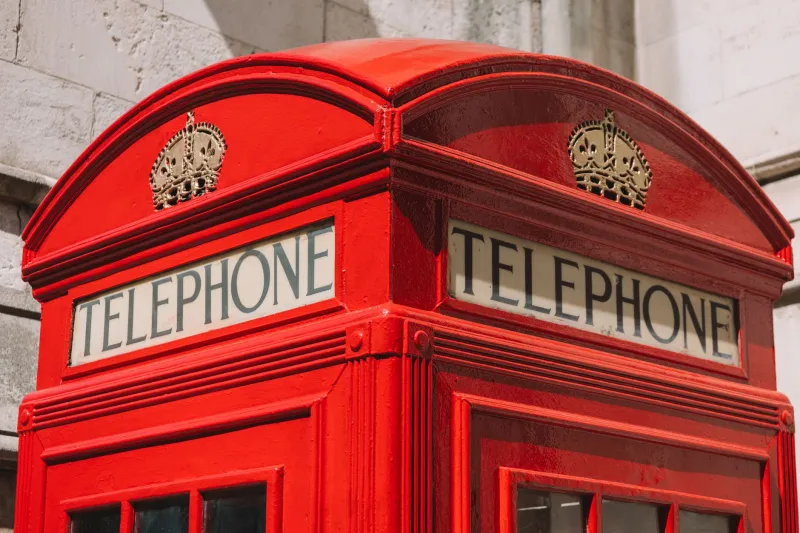
On a wet Tuesday in November 2026, the most reliable sound on Trelispen High Street is not a bus, a delivery van or a bin lorry reversing badly. It is a dial tone. Faint, slightly crackly, coming from a red phone box tucked between the bench outside the old corn exchange and a lamppost with a poster for a choir concert that happened three weeks ago.
The box is easy to miss. It does not announce itself. There is no plaque, no QR code, no cheerful volunteer in a tabard. But press the heavy metal door open, lift the receiver, and the line is there. A small, stubborn piece of public infrastructure, still doing its thing.
The box by the bench
I went to look at it properly on a Thursday morning, which is the sort of sentence that makes you realise you have become the kind of person who inspects phone boxes. Fine. There are worse hobbies.
The kiosk is the classic red sort, though the paint has gone a bit chalky at the edges and someone has scratched a heart into the glass. Inside, the phone itself is a plain grey unit with a coin slot, a keypad and a display that tells you the minimum charge in a way that feels oddly formal. The floor is dry. The shelf is clean. There is a sticker for a minicab firm that no longer exists, and a smaller sticker explaining that emergency calls are free.
It is, by the standards of 2026, a minor miracle. Public payphones have been thinning out for years. Most of us carry a mobile. Many of us cannot remember the last time we fed coins into a machine to speak to another human. And yet this one remains, switched on, maintained, part of the street the way the bench and the bin are.
The regulars
While I was loitering, a teenager in a school coat pushed the door open, looked at her dead phone and sighed the sigh of someone whose entire life is battery-dependent. She fed in coins, rang her mum, and had a four-minute conversation that consisted mostly of “I know” and “I’m literally outside.” Then she left, and the box went quiet again.
A few minutes later, a retired ferryman called Mr Pascoe stopped by. He had no mobile signal at home, he explained, and he did not trust the internet with anything more complicated than a weather forecast. He uses the payphone to ring the harbour office and, occasionally, his sister in Plymouth. “It’s not nostalgia,” he said, slightly defensively. “It’s a phone. It works.”
That is the thing about the payphone. It is not a museum piece. It is a service, albeit a small and slightly inconvenient one. It is for the teenager with a flat battery, the visitor who left their charger in a hotel, the person whose mobile has been stolen, the older resident who never got on with mobiles, and the occasional soul who simply wants to make a call without their entire contact list watching.
The archaeology of a dial tone
There is a mild bit of phone-box archaeology to enjoy here. The red kiosk design is a familiar one — glass panels, domed roof, heavy door — and this example has clearly been repainted more than once. The coin mechanism still takes the old-fashioned route: insert money, dial, talk, hope. There is no contactless reader, no app, no QR code to scan. In 2026, that feels almost radical.
But the box is not untouched. The shelf has been replaced. The light works. The door closes properly. Someone is paying for this, or at least not switching it off. That is the quiet story: a phone box does not survive by accident. It survives because a council, a telecoms company, a community group or some combination of all three decides it is worth keeping.
The economics of a ring
Public payphones are not a glamorous budget line. They sit in the same mental drawer as public toilets, drinking fountains and bus shelters: things we notice only when they are gone. In Trelispen, the box is understood to be one of a small number kept on for social need rather than profit. That phrase — social need — is doing a lot of work. It covers the person who cannot afford a mobile contract, the visitor with no signal, the emergency that happens when a phone dies.
The bigger question is not really about this one box. It is about which bits of public infrastructure a town decides to keep alive in 2026. We are good at celebrating the big stuff: the library, the leisure centre, the Christmas lights. We are less good at arguing for the small, unglamorous scaffolding that makes a high street feel like a place rather than a set of shopfronts. A bench. A bin. A working phone.
How to use it, should you need to
The payphone takes coins. Emergency calls are free. If you are planning a long chat, bring a small mountain of change, or keep it short. The box is cleaned, but it is still a phone box, so treat it as you would any shared public surface. The door is heavy. The receiver is heavier. The dial tone is, frankly, reassuring.
And if you do not need it, that is fine. You do not have to use a thing to value it. You just have to notice when it is still there.
A small promise
Trelispen’s last working payphone is not a shrine to the past. It is a small, practical promise: if you are on the High Street and you need to make a call, there is a way. That promise is thinner than it used to be, and it may not last forever. But for now, the line is open.
I gave the receiver a wipe with my sleeve, lifted it, and listened. Dial tone. Then I hung up, because I had no coins and no particular emergency, and because standing in a phone box in the rain is a strange way to spend a Thursday. But I was glad it answered.