Tre, Lis, Pen and a Few Tall Tales: Unpicking the Name Trelispen
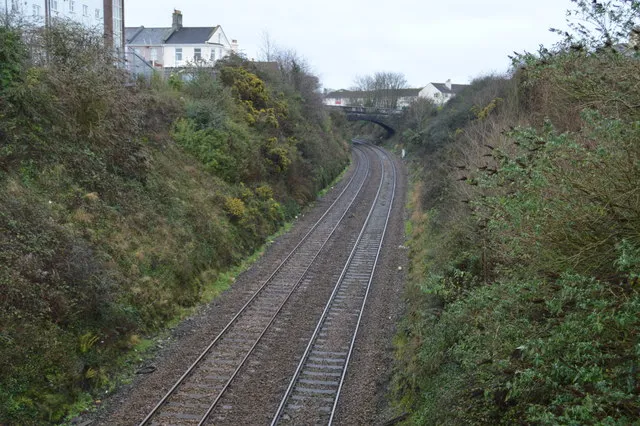
Photo: N Chadwick , CC BY-SA 2.0, via Wikimedia Commons
Trelispen is a name that sounds as if it has always been there. It rolls off the tongue, it looks neat on a road sign, and most of us say it without wondering what it actually means. But ask a local historian to unpack it and the certainties start to wobble. The town name is part Cornish landscape, part record-office guesswork and part pub folklore — and nobody can quite agree where the truth ends and the stories begin.
The obvious bit: Tre
Most people with a passing interest in Cornish place names know that tre- is the workhorse prefix. It usually means a farmstead, settlement or smallholding, and it turns up all over the county. So the first syllable is not much of a mystery. Trelispen was a place, or a farm, or a cluster of buildings, before it was a town. That much feels fairly safe.
Lis and Pen: a tempting translation
Dr Morwenna Trewin, a local historian who has spent years poring over Cornish place-name patterns, says the middle and end of the name are where things get interesting. ‘If you take the elements at face value, tre plus lis plus pen gives you something like the farm at the head of a court or enclosure,’ she says. ‘Lis can be a court, a yard, sometimes a hermitage depending on the context. Pen is a head, a top, a headland. It is a very Cornish combination: a settlement name that describes a location rather than a person.’
But she adds a caveat that anyone who has fallen down a place-name rabbit hole will recognise. ‘Place names are not maths. They get worn down, borrowed, misspelled and reinvented. A name can start as one thing and end up as another because a clerk could not read his own handwriting.’
The lost chapel theory
Local legend offers a more romantic reading. Some say there was once a chapel in the field behind the Trelispen Arms, dedicated to a Saint Lis or St Lispen, and that the name grew up around it. The story goes that the chapel was small, possibly little more than a stone hut with a bell, and that it fell out of use after the Reformation. An 18th-century antiquary apparently mentioned a ruin in the field, but no trace remains today.
Retired postman Alan Pengelly has heard the tale all his life. ‘My grandmother always said the chapel was swallowed by the hedge,’ he says. ‘She was not a woman for evidence, mind. She once told me the Devil had a hand in the harbour wall, so you take it as you find it. But there is a funny flat bit in that field, and people have always pointed at it.’
The stubborn landowner and the boundary stone
Another version of the story involves a landowner who refused to move a boundary hedge, even when the parish wanted a new road. In this telling, the name ‘pen’ got attached because the hedge ended at a headland, and the whole affair became a local byword for awkwardness. It is a good yarn, but it has the whiff of a story invented to explain a name rather than a name that remembers a real dispute.
What is interesting is how often the same motifs turn up: a lost religious site, a stubborn farmer, a boundary that would not budge. These are the ingredients of half the place-name legends in Cornwall, which does not make them false, but it does make them hard to pin down.
The pub sign problem
The Trelispen Arms sign is not reliable evidence. The current sign, repainted in the 1970s, shows a fish, a boat and what might be a bishop. No one can agree. The landlord says, ‘It is meant to be St Lis with a fish, but the painter got carried away.’ A regular at the bar insists it is a portrait of a former landlord who lost a bet. Either way, it is a lovely sign and a terrible source.
What the records actually say
At the county record office, the earliest forms of the name are not quite as tidy as the modern spelling. Trelispenn appears in a 14th-century rental, Trellyspern on a Tudor map, and Trelispen by the 18th century. The variation is normal. The ‘-pen’ ending is stable, the middle syllable less so. There is no smoking gun, no single document that says ‘this is what it means and here is why’.
Why the mystery is the point
Dr Trewin thinks the search for a final answer misses the fun. ‘The name is not a puzzle to be solved once and for all,’ she says. ‘It is a conversation the town has with itself. Every generation adds a layer, and some of those layers are nonsense. That is fine. It is how places make themselves at home in their own names.’
At the café on Fore Street, the theories are just as lively. ‘My dad reckoned it was three words: tre, lis and pen, and the pen was where they kept the geese,’ says regular Sheila Nankervis. Another customer has been told it is a corruption of Trelispenna, a woman’s name, though she cannot remember who told her. A third insists the ‘lis’ bit is French, which seems unlikely but has a certain confidence to it.
Over to you
So what is your family theory? Did a grandparent swear blind that Trelispen was named after a ship, a saint, a stubborn cow or a lost chapel? We would love to hear it. Dig out the old photos, ask the oldest person at the table, and send us your version. The town name has survived worse than a few tall tales — and it is all the more interesting for them.