Nine O'Clock, Every Morning: The Notebook That Knows Trelispen's Weather Better Than the Forecast
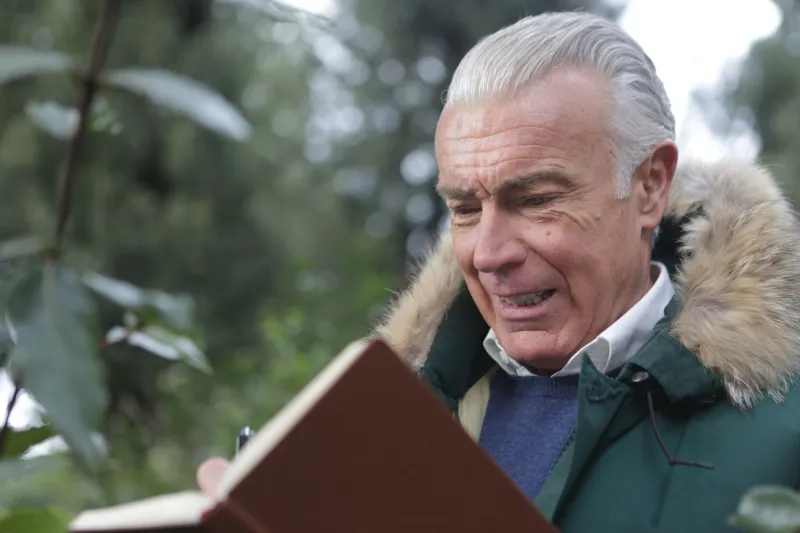
There is a particular kind of Trelispen morning that makes people look up. Low cloud, a bit of drizzle, the smell of wet leaves on Bishop's Lane. On mornings like that, half the town has a vague sense that it might rain later. Ray Pellow knows it was 3.2 millimetres by nine o'clock, that the overnight minimum was 6.1C, and that the wind is coming in from the southwest with the sort of determination that usually means a wet afternoon.
Ray has been writing this down since the 1970s. Not for a university, not for the Met Office, and not, he insists, because he is any sort of expert. He started because his father kept a diary and because a neighbour gave him a spare rain gauge. Fifty-odd years later, the notebooks fill a cupboard in his back bedroom and a good chunk of his garden is given over to instruments that look like they belong in a slightly overgrown school science department.
The nine o'clock ritual
The routine is not dramatic. At nine, Ray puts on a coat — or doesn't, depending on the month — and walks to the bottom of the garden. There is a rain gauge, a Stevenson screen with maximum and minimum thermometers, and a small notebook in a plastic wallet. He reads, writes, checks the previous day's figures, and goes back inside for a second cup of tea. The whole thing takes four minutes. Maybe five if the gate is sticking.
"People think it must be a hobby," he says. "I suppose it is. But it's more like putting the bins out. You don't decide whether to do it. You just do it, and then you feel odd if you haven't."
That consistency is the point. Weather records are not much use as a single day's scribble. They become interesting when they pile up — when you can say that Trelispen had a run of dry Aprils in the 1990s, or that the first frost used to arrive earlier than it does now. Ray's notebooks are not official data, and he is quick to say so. They are one garden, one set of instruments, one person's careful attention. But they are local, and that makes them useful in a way that a regional forecast rarely is.
The neighbours who ask
Word gets around. The allotment society rings him when a cold snap is forecast. The cricket club has been known to check with him before calling off a Saturday match. A local baker once asked whether the humidity was going to play havoc with a batch of pasties, which Ray thought was pushing the limits of meteorology but answered anyway.
His most loyal readers, though, are the people who live nearby. They stop at his gate. They ask whether it is going to clear up. They tell him what their knees are saying, and he listens politely, because half of local weather-watching is just listening to people.
"I'm not a forecaster," he says, with the patience of a man who has said it many times. "I can tell you what happened. I can tell you what usually happens next. But Trelispen has its own ideas."
That is the other thing the notebooks show. Trelispen does not always follow the wider regional picture. The town sits in its own small dip of geography, with the brook running through the middle and the hills doing whatever they do to the cloud. Ray has recorded days when the forecast promised sunshine and the town got fog, and days when a yellow warning passed overhead without dropping a single drop on his garden.
What fifty years of scribbles reveal
Ask Ray what has changed and he does not reach for grand statements. He reaches for the notebooks. Winters, he says, feel wetter rather than colder. Frosts are less reliable. The first proper cold snap seems to arrive later than it did in the 1970s, though he is careful to add that a garden in Trelispen is not the whole planet.
There are oddities too. A hailstorm in the 1990s that left drifts on Market Street for hours. A February so mild that the daffodils came up in January. A summer week in the 1980s when the thermometer in his screen hit a number he still describes as "suspicious", so he checked it against the neighbour's and found they agreed. He has a page marked with a star for the day a sudden downpour dumped more rain in an hour than the whole of the previous month.
"You get these little stories," he says. "They don't mean much on their own. But you put them together and you start to see the shape of the place."
The stubborn thermometer
The thermometer is the one thing that has not changed. It is old, glass, and slightly awkward. Ray has been offered digital replacements. He has accepted one, used it for a fortnight, and gone back to the old one. The digital version, he says, is fine, but it does not have the same feel. It also, apparently, disagreed with the old thermometer by 0.3C, and Ray was not prepared to have that argument with a machine.
So the routine continues. Nine o'clock, garden, notebook. In November 2026, with the light coming up late and the grass holding onto the damp, Ray will be there, writing down whatever Trelispen decides to do next. He does not expect anyone to build a statue. He would probably find it embarrassing. But if you live in the town and you want to know whether to hang out the washing, there are worse places to start than the man with the notebook at the bottom of the garden.