The Warmest Room on Platform Two: Trelispen Station’s Volunteer Kettle and the Hour It Buys
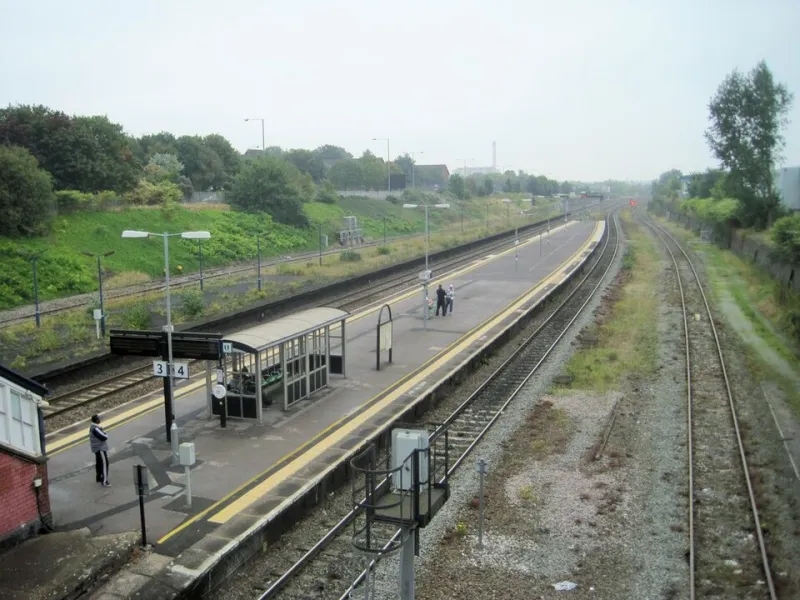
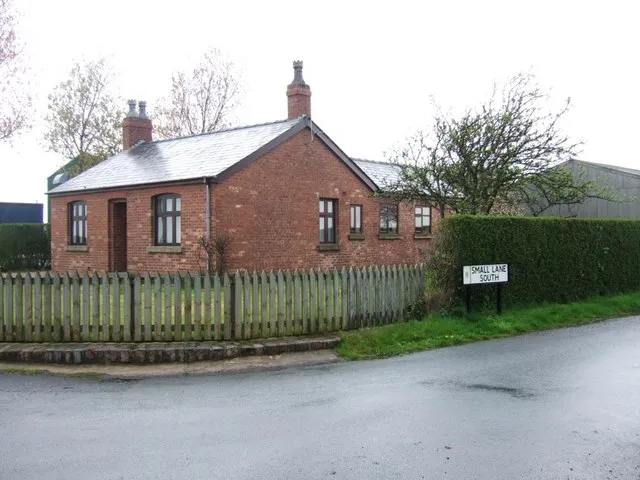
Photo: Nigel Thompson , CC BY-SA 2.0, via Wikimedia Commons
The 18.40 is late again. It is always late in the way that a bus is always late — not dramatically, just enough to add twenty minutes to somebody’s evening. Four people are in the waiting room on platform two. One is doing a crossword. One is asleep with a dog lead looped round her wrist. Two are arguing, companionably, about whether the train is late or whether the board is wrong.
It is 6.12pm, it is four degrees outside, and the small electric fire behind its guard is doing the work of a much larger appliance in the minds of everyone present.
The room itself
Trelispen station is not grand. Two platforms, a footbridge with a handrail that has been repainted so often the bolts have sunk, and an hourly service to the junction that everyone treats as a fact of nature rather than a decision made by anyone.
The waiting room on platform two was, until the 1970s, the parcel office. You can still see where the counter was — a long rectangle of slightly different floor. Since then it has been a store cupboard, a ticket office, a store cupboard again, and, for the last eleven years, a room.
Inside: six chairs of four different designs, a bench, a bookcase nobody catalogues, a jigsaw on a tray that has been three-quarters finished since August, a fake plant, and a clock that runs four minutes fast. The clock is fast on purpose. Nobody will say who decided this, only that it has prevented a certain amount of shouting.
The kettle rota
On the back of the door, on a sheet of A4 in a plastic wallet, is a rota. Eleven names, one for each week of a two-and-a-half-month cycle, then a gap, then eleven names again. Next to the kettle is a tin of biscuits and a hand-written card: IF YOU TAKE THE LAST ONE, YOU BUY THE NEXT TIN.
Marjorie Kellows is 68, walks the half mile from Marrow Lane twice a week and has been formally attached to this room for nine years as its volunteer adopter. She wipes the surfaces, waters nothing (the plant is plastic, and she is the first to point this out), restocks the tea and writes the notices nobody asks her to write.
‘The railway keeps the trains,’ she says. ‘Somebody has to keep the room.’
The electricity is paid for out of a small parish council arrangement and a jar by the kettle that nobody monitors and everybody feeds. There has never, as far as anyone can establish, been a shortage.
A noticeboard of its own
The room has its own small corkboard, three feet by two, and it operates entirely outside the rules of the bigger board at the front of the station. Here you will find: a lost glove notice; a card advertising a cat sitter; a photocopied timetable with the 07.12 circled; a notice about the mending morning on Fennel Row; and, permanently, a sheet of paper headed PLEASE DO NOT ASK THE GUARD TO HOLD YOUR KEYS.
There is also a sign above the kettle reading NO POLITICS BEFORE 8AM, which was put up in 2021 and which everybody agrees has worked better than expected.
What winter does to a room
The waiting room has two populations and they barely overlap.
The morning crowd is commuters: people who arrive twelve minutes early on purpose because those twelve minutes are the quietest of their day. Priya, who gets the 07.12 three days a week, describes the room as ‘the last bit of the morning that belongs to me’. She reads. She does not talk before 7.30 and everybody knows it.
The afternoon crowd is different. Dog-walkers cutting through to the footpath behind the allotments. Schoolchildren sheltering for ten minutes at half three. Two retired men who come in for the fire and the crossword and have been known to let three trains go by without comment.
Between them sits the group that only exists in winter: people waiting because something has gone wrong. A missed connection. A bus that stopped running in October. A walk up the hill that is fine in June and not fine in February at half six in the evening.
The last warm hour
The fire goes off at seven. The room closes at 19.20, after the last train, and the chairs go back roughly where they were. The keys go back to the guard, who is called Tom and who is the last member of staff on the station most evenings.
Tom has a theory about the room, which he will share if there is time and the crossword is finished.
‘People think it’s nostalgia,’ he says. ‘It’s not. It’s just warmth and a chair. If you’ve got those two things, the twenty-minute delay stops being an insult and starts being twenty minutes.’
Outside, the 18.40 comes into view around the bend past the old signal box and four people gather their bags. The fire ticks as it cools. Somebody has already written their name on the rota for next week, in biro, at an angle, the way it has been done for eleven years.