Ahead by Three: The Quiet Campaign to Preserve Trelispen’s Favourite Inaccuracy
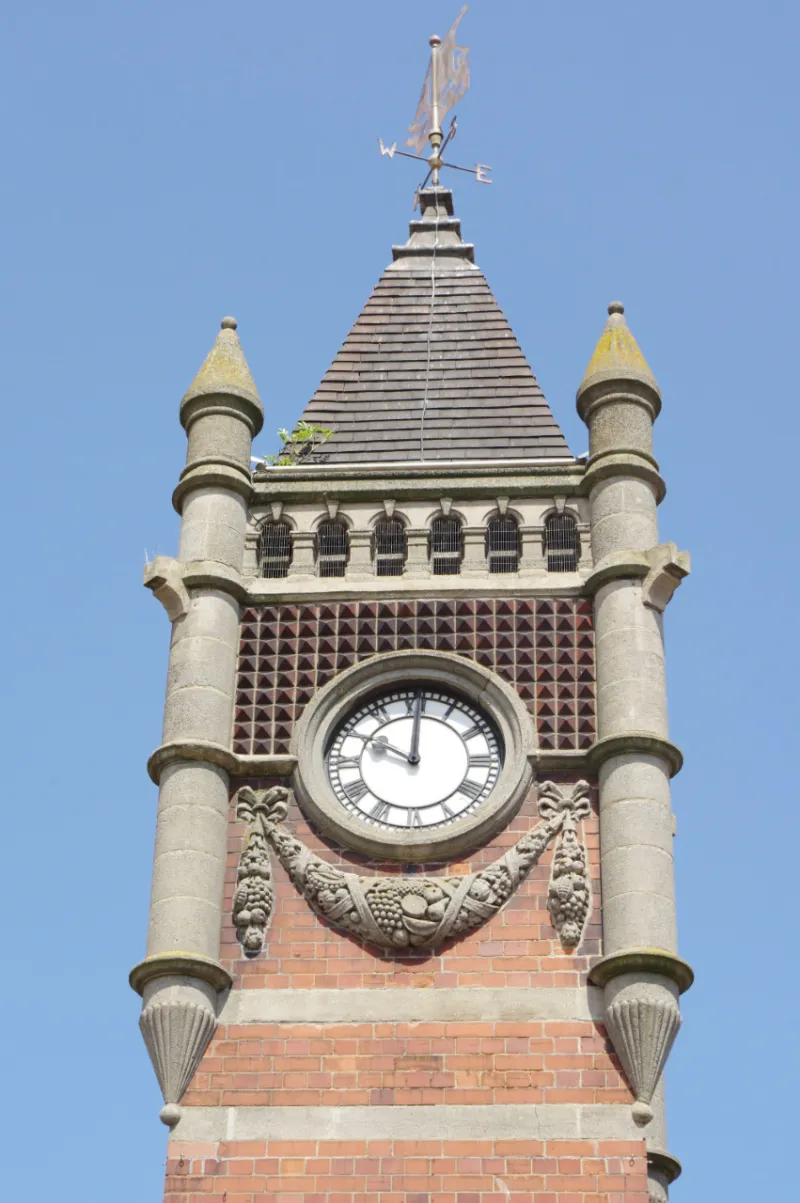
Photo: Stephen McKay , CC BY-SA 2.0, via Wikimedia Commons
At 8.47 on a grey November morning, the clock above Trelispen’s old market hall is telling anyone who glances up that they have three minutes fewer than they actually do. Phones disagree. The bus app disagrees. The clock, however, has been disagreeing for decades, and a growing band of residents would like it to carry on.
Welcome to the campaign to keep Trelispen’s town clock wrong.
A clock with a head start
The dial itself is not the problem. Local historian Margaret Voyle dates the current face to 1898, when the market hall was smartened up for the town’s charter celebrations. The mechanism behind it has been altered several times since – converted to electric winding in the early 1970s, serviced in fits and starts, and adjusted by people with varying degrees of confidence and ladders.
Somewhere along the way, the clock picked up its habit of running fast. The town archive has a note from 1974 complaining that the clock was ‘ahead of itself again’. A later entry from 1988 records a repairer who promised to ‘settle her down’. She did not settle. She has been three minutes fast for most of living memory, give or take a minute after frost or a stiff easterly.
The repair that made it worse
Trelispen has tried to fix the clock. That is part of the story. In 2019, a contractor was brought in to reset the mechanism. For a fortnight, the clock ran five minutes fast. Then it drifted back to three and stopped there, as if it had considered the whole exercise and decided against it.
A more ambitious attempt in 2023 involved a volunteer with a head torch and a copy of a maintenance manual printed from the internet. The clock struck twelve at 11.57 for a week, which confused the bell-ringing practice and delighted local children. Since then, the town council has taken a more cautious approach. The clock is due a routine service in spring 2027, and officers say no decision has been made about its timing.
The three-minute buffer
For all the talk of heritage, the campaign’s strongest argument is practical. Trelispen’s bus station sits a short dash from the market hall, and the 14 to Carminster leaves at five past the hour. Regulars know that if the clock says 9.05, the bus is already pulling out. If it says 9.02, they have time to cross the road, nod at the driver and find a seat.
‘It is not an error, it is a buffer,’ says Nell Probert, who runs a café on the square and started the Keep the Three petition in September. ‘People plan their mornings around it. School run, doctor’s appointment, the last post. You learn to read the clock the way you read a friend’s mood. You know what it means.’
The petition, a mix of paper sheets and an online form, has gathered around 600 signatures. Not a revolution, but enough to make the town council pause. Probert says the response has been mostly warm, with a few furious exceptions from people who have missed trains.
When wrong becomes heritage
There is a wider question here, and it is not really about clockwork. When does a local quirk stop being a fault and start being a civic treasure? Trelispen has form. The town has preserved a wonky bench, an unstaffed shed shop and a Christmas switch-on that runs on approximate timing. Accuracy has never been the point. Reliability has.
The clock is not accurate. It is reliable. It is reliably three minutes fast, which is a different and more useful thing. Newcomers find it baffling. Estate agents call it ‘charmingly useless’. But the people who queue for the 14 have built a small morning ritual around it, and rituals are hard to timetable.
Not everyone is convinced. One retired teacher told me the clock should be corrected ‘for the sake of the children and the railway’. A shopkeeper on Market Street said she would rather have a clock that told the truth, then admitted she sets her own watch five minutes fast anyway. Trelispen is not a town that agrees on everything, but it does enjoy a good argument about small things.
What happens next
The council’s service in 2027 will almost certainly involve opening the mechanism, cleaning it and checking the electrics. Whether anyone will be brave enough to move the minute hand is another matter. The Keep the Three campaign has asked for a formal discussion before any adjustment, and has suggested a small plaque explaining the clock’s longstanding three-minute lead.
That may be the most Trelispen outcome of all: not a victory for accuracy, not a victory for nostalgia, but a plaque. In the meantime, the clock will carry on doing what it does. At 8.47 this morning, it was already 8.50 in its own mind. The bus was at 9.05. The café was open. And somewhere on the square, someone was running for a door that was still, technically, three minutes away from closing.