The Doorways That Remember: Walking Trelispen’s Former Pubs
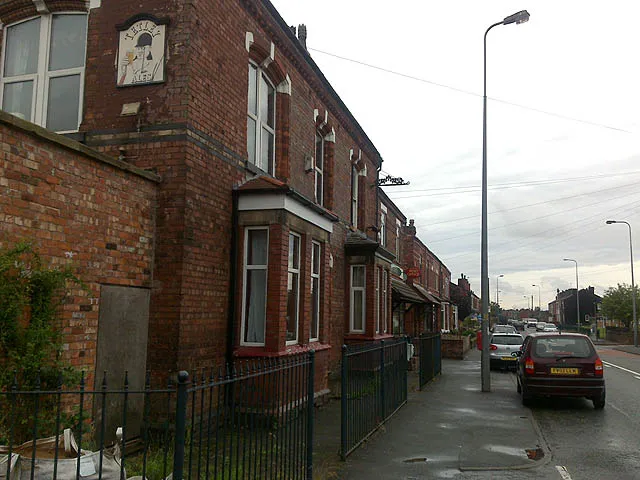
Photo: David Lally, CC BY-SA 2.0, via Wikimedia Commons
There is a particular kind of quiet that hangs around a building that used to be a pub. It is not quite the quiet of a church, nor the hush of a library. It is the silence of a room that once held a Friday night and now holds a washing machine, a stack of menus or a row of hairdryers. In Trelispen, you do not have to look far to find it.
This is not a pub crawl in the usual sense. There are no pints at the end of each leg, though a flask is never a bad idea in November. It is a walk through the town’s former licensed premises, using faded wall signs, old license plates, tiled doorways and the memories of people who drank there to piece together a map of Trelispen that no longer appears on any tourist board.
Start Where the Trains Used to Stop
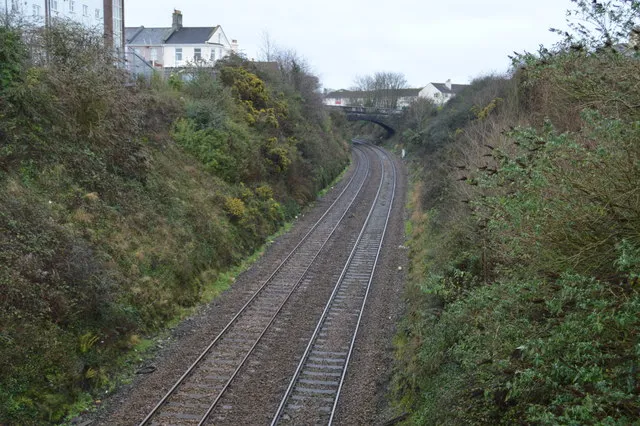
Begin on the station approach, where the old Railway Bell still announces itself in ghostly capitals on a gable end. The building is flats now, and the sign has been softened by decades of weather into something closer to a rumour. But the shape is there if you stand at the right angle, and so is the old black license plate above the side door, its gold lettering worn down to a suggestion.
‘My grandfather used to say the Bell was the first and last pub of Trelispen,’ says Alan, who has lived off Bridge Street for most of his life. ‘First if you were waiting for a train, last if you had missed one. There was a bench outside and a landlady who kept a tin of biscuits for the drivers. You did not go in there for a gastropub meal. You went in because the fire was on and the door was open.’
The Railway Bell’s doorway still has the small brass plate where a bell-push would once have been. It is the sort of detail that survives by accident, not design. A reminder that pubs were not just rooms for drinking. They were waiting rooms, meeting rooms and somewhere to kill an hour before bad news or good.
A Chip Shop With a Public Bar Past
Head down towards Quay Lane and the smell changes before the building does. The Anchor is a chip shop now, and a good one by local reputation, but its frontage still carries the bones of a pub. There is a tiled threshold worn into a shallow dip, a narrow window that once looked into a public bar, and a faded painted sign on the side wall advertising ‘Ales & Stout’ in letters that have almost given up.
Margaret, who worked behind the Anchor’s bar in the 1970s, remembers it as a room with two speeds. ‘Lunchtime was all dockers and newspapers and nobody saying much. Evening was louder. There was a piano nobody could play properly and a dartboard that had seen better days. When it became a chip shop, I thought it would feel wrong. But the smell of vinegar and salt is not so far from beer and cigarettes, really. It still smells like a place people come to be together.’
That is the thing about these buildings. The use changes, but the social geometry often stays. The Anchor still has a queue on a Friday. People still stand outside with their food, talking about the weather and the price of things. The pub has gone, but the corner has not forgotten how to be a meeting place.
The Hairdresser and the Half-Timbered Ghost
Bridge Street offers the most theatrical of the lost pubs. The Old Crown is a hairdresser now, all mirrors and good lighting, but the building itself still puts on a show. Black-and-white timbering, a low doorway, and an iron bracket where a pub sign once swung. The name is gone from the front, yet the old license plate survives above the back entrance, half-hidden by a downpipe.
‘People come in for a cut and ask about the pub,’ says stylist Priya. ‘I have a folder of old photos behind the desk. Customers bring them in. One man brought a photo of his parents outside the Crown on their wedding day. You cannot really decorate over that, can you?’
The Crown was a darts pub, by most accounts. A small front room, a landlord who kept the trophies on the windowsill, and a team that apparently argued more about the fixture list than the actual games. The hairdresser keeps one of the old trophies on a shelf near the kettle. It is not a museum. It is just a thing that did not seem right to throw away.
Where the License Plate Still Says Everything
Not every trace is a wall sign. Some of the best evidence is smaller and stranger. In Chapel Yard, the old Wheatsheaf is a convenience store now, its windows full of crisps and cleaning products. But above the door, a rectangular plate records the premises as licensed by the Trelispen Borough Council, with a date worn down to the last two digits.
License plates are the paperwork of pub history. They tell you that a room was officially recognised, inspected, taxed and argued over. They also tell you that the town had a bureaucracy of beer long before it had a heritage trail. The Wheatsheaf’s plate is not beautiful, exactly. But it is proof. Someone signed off that room. Someone kept it to standard. Someone expected it to be there.
Locals remember the Wheatsheaf as the quiet one. ‘If you wanted to hear yourself think, you went there,’ one woman tells me outside the shop, without giving her name. ‘It was where the older ones went for a half and a chat. Not everyone wants a big night out. Some people just want a chair and a bit of company.’
The Pub That Became a Living Room
Further along Coombe Road, the Shipwright’s Arms has gone the way of many former pubs: converted into flats. The building has been tidied up, but the old pub doorway is still there, a little too wide for a normal front door, with a step that once took a delivery of barrels. A small ‘Private’ sign has been repainted, though whether it refers to the flats or the old snug is anyone’s guess.
This is where the walk becomes less about nostalgia and more about questions. What did these rooms mean to Trelispen? A pub is not just a business. It is a third place, neither home nor work, where people can be alone together. When it goes, the town does not simply lose a bar. It loses a room where the same faces saw each other through winters, strikes, babies, bereavements and quiz nights.
That is not to say every lost pub should have been saved. Some were tired, some were badly run, some were simply too big for the trade. But the traces matter. The ghost signs, the plates, the doorways, the stories told by people like Alan, Margaret and Priya. They are not just decoration. They are a record of how the town used to spend its evenings.
What the Walls Still Owe the Town
You can walk this route in about ninety minutes if you do not stop too often. You will pass a chip shop, a hairdresser, a convenience store and a block of flats, and you will see, if you look up, the faint outlines of another Trelispen. One with bell pushes and dartboards and a landlord who kept biscuits for train drivers.
If you know of a ghost sign or an old license plate in town, it is worth photographing it while it is still there. Weather, render and double glazing are patient enemies. The local history group is always glad of copies, and so are the people who remember the rooms when they were full.
Trelispen’s lost pubs do not ask for tears. They ask for a second look. A doorway that once opened onto a public bar now opens onto someone’s hall. But the step is still worn. The wall still remembers. And on a grey November afternoon, that is enough to make you stop and listen.