Jam Jars, Sharpies and Unwritten Law: Inside Trelispen’s Allotment Seed Swap
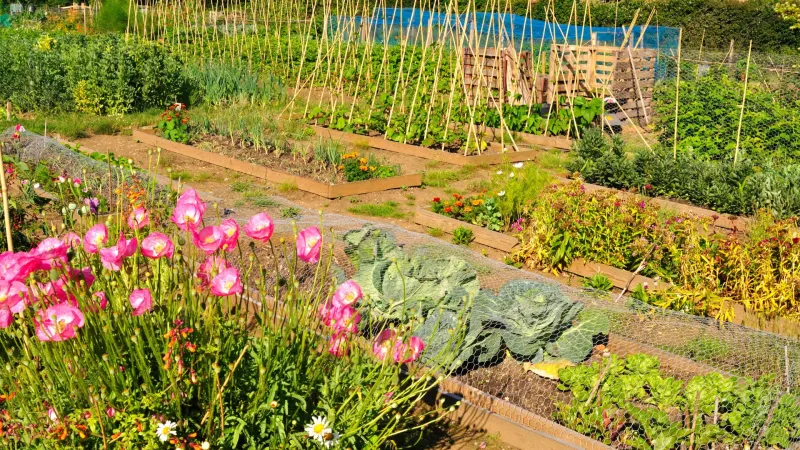
Photo: allotment shed seed swap labelled jam jars seed packets gardeners UK, via help.gardeningexpress.co.uk
The annual seed swap on the Trelispen allotments takes place in a wooden hut with a paraffin heater, a trestle table and about eleven square feet of usable floor. It starts at ten. By twenty-five past, the good tomato seed is gone.
This is not an official event. There is no entry fee, no booking system, no programme. The society puts a note in the shed window in January and that is the extent of the marketing. What arrives instead is sixty-odd growers, a filing cabinet full of envelopes, three dozen jam jars with labels on the lids, and a set of rules so thoroughly understood that nobody has ever thought to write them down — which is, I would argue, exactly how they survive.
The label is the law
Everything in that room is dated. Not vaguely dated, properly dated, in pencil most often, with the year and — this is the part people get exercised about — the conditions it grew in.
‘If you can’t say what it is and when it was, don’t put it on the table,’ says Viv Rickard, who has been secretary of the society for six years and who spends most of the swap quietly turning jars round so the labels face outwards.
There is a commercial seed taboo, too, though a gentle one. Nobody is going to search your pockets. But a packet with the barcode still on, plonked down among the hand-labelled jars, is seen the way a shop-bought cake is seen at a village show. Technically allowed. Widely discussed.
The courgette problem
The courgette table is the front line.
Ernie Troon has had plot 14 for forty years and holds that the only courgette worth growing in this soil is a long, pale, extremely unphotogenic local variety that he calls Trelispen Long Green and that he has been saving since before most of the current plot-holders had a key.
Others — a younger contingent, mostly on the far side of the site — favour a compact, reliable, heavy-cropping variety that produces more than any reasonable household can eat. The argument has been going since around 2019 and has never once been resolved, because it is not the kind of argument that wants resolving. It is the kind of argument that gets both parties through February.
‘He’s not wrong about the flavour,’ concedes Sal Pengelly, who is not wrong about much herself. ‘He’s wrong about the yield.’
Nobody keeps score
Ask anyone at the swap whether they keep track of what they bring versus what they take and you will get the same answer: a slightly too quick no.
The swap works on a bring-something-leave-something basis. Take more than you brought and nobody says a word. Do it twice and you will find, the following year, that the offer of a lift has quietly stopped being made, and that the good bean seed has already gone when you arrive.
It is not punishment. It is weather.
Shed-door justice
Disputes — and there are disputes, most of them about blight, germination rates and one memorable row about a borrowed sieve in 2022 — do not go to the committee. They go to the shed door.
The shed door is where two people stand outside in the cold for six minutes and emerge, if not friends, at least able to be in the same hut. No minutes are taken. Nothing is recorded. The matter is considered closed the moment both parties pick up a rake.
There is a formal AGM every autumn. It has never once discussed the seed swap. This is, everyone agrees, entirely correct.
Why sharing beats hoarding, practically
Strip away the ritual and the swap exists for a boring, excellent reason: seed that is saved locally, year after year, gets better at growing here. It acclimatises. It learns the soil and the damp and the peculiar microclimate of a town where the brook runs under the high street and the wind comes off the ring road.
A grower who hoards a good bean gets a good bean. Sixty growers who share it get a strain that survives a bad summer. The swap is not sentimentality. It is a slow, unpaid, forty-year experiment in plant breeding, conducted in a hut, with a heater, in February.
What to do if you go
Bring more than you take. Label everything, including the things you think are obvious. Do not boast about last year’s crop until at least March. And if two people are standing at the shed door in the cold, take your time over the noticeboard and let them finish.
The next swap runs on the second Saturday of February 2027, from ten until the tomato seed runs out. Which, historically, is about twenty-five past.